Computer vision-based app for skin disease monitoring
About the client
Development of a computer vision app based on an ML model for detecting and monitoring skin diseases of patients
The challenge
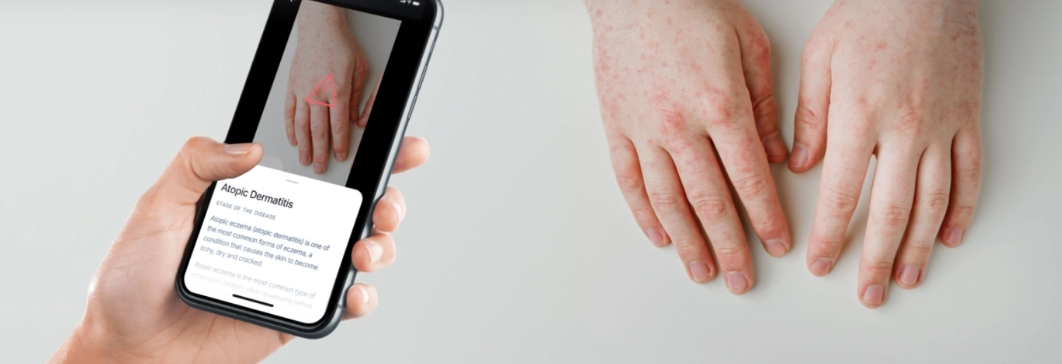
Visiting a doctor to track the course of skin diseases is time-consuming and inefficient. Moreover, frequent visits to the dermatologist are challenging for older individuals and those with disabilities. To solve this problem, the LS team decided to create an app that would detect, track, and collect information about skin disease course as well as enable remote consultations.
Delivered value
The LS team built an MVP of a computer vision-based application for skin monitoring that determines two skin diseases, herpetic whitlow and psoriasis. Our app allows users to track their skin disease and communicate with their practitioner more efficiently. The app we built is ready for completing the investment round and further product refinement.
Solution
In the first place, our experts analyzed the possible implementation options and considered using AI to build our skin disease monitoring app. After consulting with medical professionals, we realized our app should focus on detecting and tracking two widespread skin diseases, herpetic whitlow and psoriasis.
As a result of the initial discovery, we defined that the Skin Vision project will consist of:
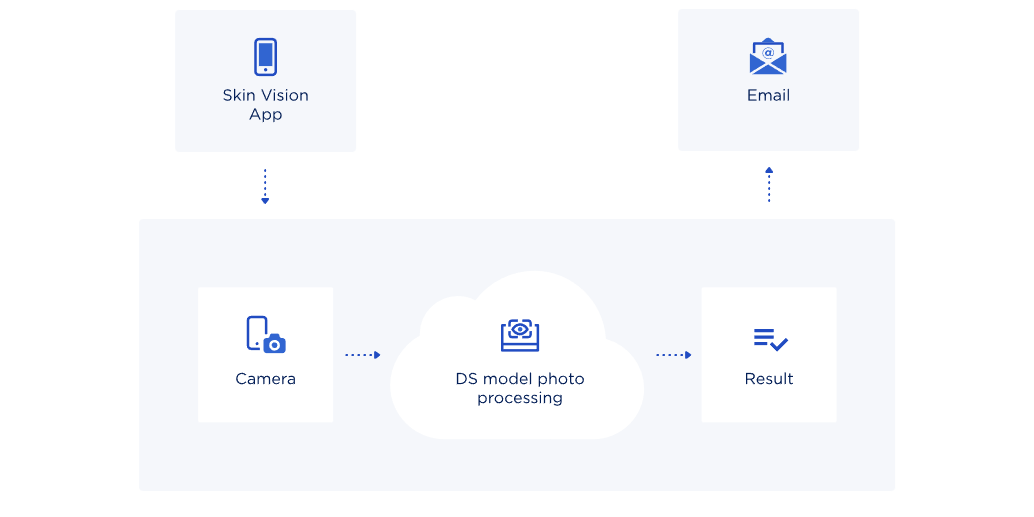
The computer vision part, which includes the development of an ML model that recognizes skin diseases, tracks their state, and collects historical data on the progress of those diseases.
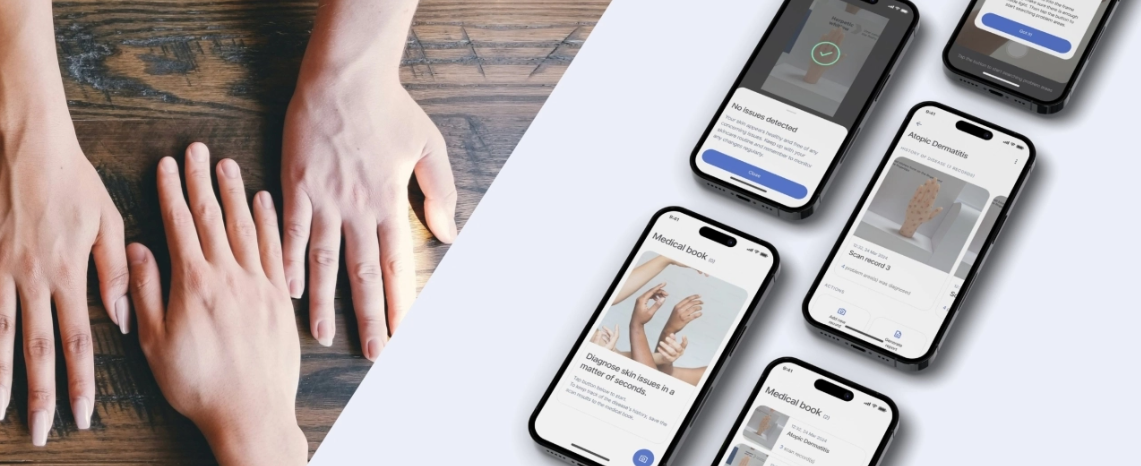
Building a user-friendly mobile app that simplifies the treatment process by enabling remote tracking of the disease course and providing access to healthcare professionals in the palm of your hand.
Once we had a clear roadmap, our engineers moved on to the development of an ML model. For this, they collected data and ran a data labeling process based on two skin diseases, herpetic whitlow and psoriasis. LS data scientists used the PyTorch library to build the model, which was later converted into TensorFlow Lite for integration with the mobile app.
While training the model, we ensured potential challenges like poor lighting and blurred images don’t affect disease detection and tracking accuracy. We used augmentation techniques to cover potential cases with lightning conditions, image sharpness, and angles of view.
At the same time, our mobile development team was building an app covering the following functionality:
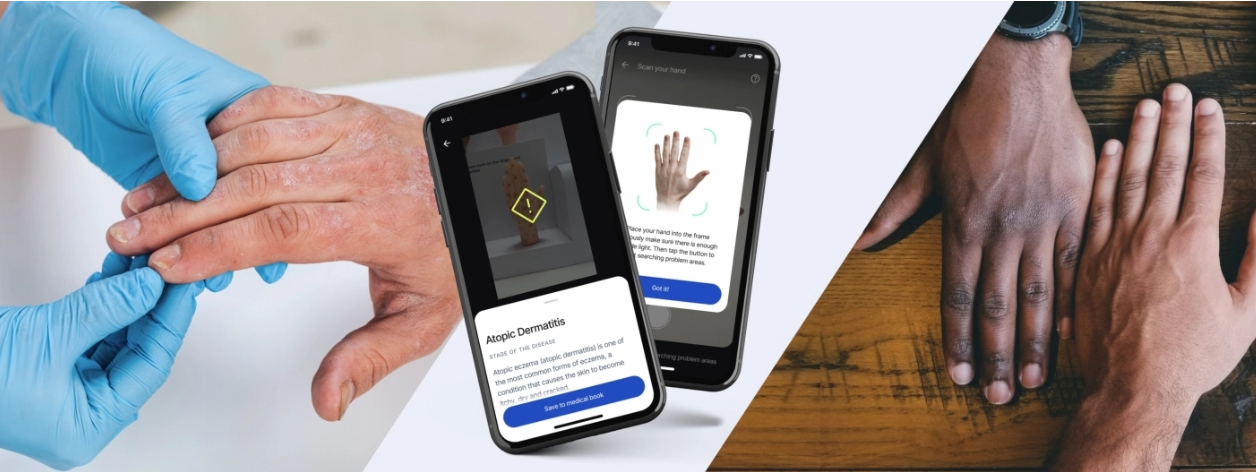
An in-app camera, which detects the skin disease and analyzes its state.
A messaging functionality, ensuring smooth communication between a patient and a doctor.
Disease tracking and treatment progress reporting functionality.
An accessible user interface designed to meet the needs of all users, including seniors and people with disabilities.
The final stage of developing the Skin Vision project was integrating the ML model we built into the mobile app. As a result, our team created a fully functioning MVP of an MDR, HIPPA, DiGA, and ISO 13485:2016 compliant medical application. The further development of the product will cover the extension of compliance with medical regulations and functionality enhancement.